Learning a new language — especially one as widely spoken and culturally rich as Spanish — comes with many choices. You could enroll in local classes at home, take online lessons, or dive headfirst into immersive learning abroad. For many serious learners, however, the difference between traditional classroom study and full immersion is monumental. In this post, we explore why language immersion in Mexico — especially through intensive Spanish immersion programs — often outperforms conventional classroom learning. If you are looking for the best Spanish immersion programs to truly speak and think in Spanish, read on.
-
Immersion vs. Classroom: Real-Life Spanish vs. Textbook Spanish
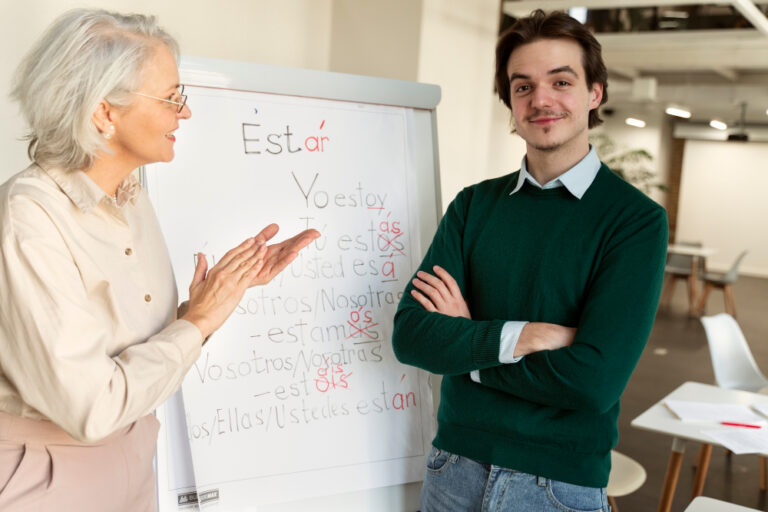
In a traditional classroom setting at home, Spanish lessons usually revolve around grammar rules, vocabulary lists, written exercises, and periodic conversation practice. While these provide a foundation, they seldom replicate real-life language use. You might memorize sentence structures, but rarely get to use them in real conversation or cultural context.
On the other hand, a Spanish language program in Mexico — such as the one offered by Spanish Institute of Puebla — embraces a communicative, functional approach. From day one, students are encouraged to think, speak, and interact in Spanish. The result: you stop “studying Spanish” and start living Spanish.
In immersion programs, Spanish becomes more than just a subject — it’s the medium of everyday life. You learn to order food, chat with locals, explore streets, and engage in cultural activities. This constant exposure builds not just textbook knowledge, but real fluency.
-
Accelerated Progress: Why Immersion Leads to Faster Fluency
One of the strongest advantages of learn Spanish abroad Mexico programs is speed. Immersion forces your brain to adapt quickly — whether you are ordering coffee, asking directions, shopping at a market, or just conversing with classmates and host-family. Such daily use of Spanish dramatically increases your listening comprehension, vocabulary retention, pronunciation, and conversational confidence.
Whereas classroom learners may get a few hours per week of Spanish contact, immersion students may spend several hours a day — inside and outside class. This frequency and consistency make a huge difference: you go from “studying Spanish” to “speaking Spanish.” Many immersion learners report significant gains even after just a few weeks.
For anyone seeking to learn Spanish fast — perhaps for travel, work, or cultural interest — immersion is often the most efficient path.

-
Cultural Immersion: Learning Spanish and Mexican Culture Simultaneously
Language and culture go hand in hand. A traditional class might teach you the grammar of Spanish, but rarely its soul: idioms, expressions, cultural references, social context. That’s where immersion in Mexico shines.
At Spanish Institute of Puebla, students are not just confined to classrooms. The program includes cultural activities, excursions, and opportunities to integrate with local life. You might take cooking classes to learn traditional recipes, dance folkloric dances, visit historical sites, or stroll through colonial markets — all while using Spanish naturally.
Puebla itself — a UNESCO World Heritage city, rich in colonial architecture, traditions, cuisine (like mole poblano, chiles en nogada), and history — becomes your extended classroom. Walking its colorful streets, visiting its plazas and churches, immerses you in the history and rhythms of Mexican life, adding layers of meaning to the vocabulary and grammar you learn.
This cultural depth fosters not just linguistic fluency, but cultural fluency — you don’t just speak Spanish, you understand how it lives within Mexican lifestyle.
-
Individualized & Effective Teaching: Small Groups, Personalized Attention
Another strength of immersion-based Spanish programs in Mexico lies in the teaching format. At Spanish Institute of Puebla, for example, the immersion program offers small group classes and personalized instruction, ensuring attention to each student’s level and goals.
Morning classes typically involve small groups (max six students per instructor), focusing on grammar, comprehension, reading, writing — while afternoon sessions often include one-on-one conversation practice with a native-speaker “conversation guide.” This combination accelerates learning and helps students build both structural knowledge and conversational confidence.
Moreover, since students come from diverse backgrounds — professionals, retirees, teachers, doctors, business people — the program can be tailored to specific needs (business Spanish, travel Spanish, everyday conversational Spanish, etc.).
-
Real-World Context: Everyday Spanish, Not Classroom Scenarios
One of the main drawbacks of classroom learning is the artificial context: dialogues written for textbooks, sample sentences, role plays. They help, but often feel detached from real life. In contrast, immersion in Mexico gives you real-world context from the start.
Imagine ordering at a café, bargaining at a market, chatting with a host-family, commuting, or exploring cultural festivals — all in Spanish. Every such interaction reinforces what you learn in class and helps your mind associate Spanish with daily use. That’s a huge advantage over home-based classroom learning.
Regular exposure to native conversation, local accent, idiomatic expressions, and colloquial Spanish accelerates your transition from thinking about Spanish to thinking in Spanish.
-
Motivation, Confidence and Cultural Integration: Learning Beyond Grammar
Studying in a foreign country involves stepping out of comfort zones. This challenge — combined with constant exposure — pushes learners to use Spanish constantly. Over time, this builds not only fluency but confidence. The immersive environment encourages you to speak, make mistakes, learn, adapt — and ultimately, to think and respond in Spanish naturally.
Additionally, living in Mexico gives you deep cultural immersion. You don’t just learn vocabulary — you absorb traditions, values, gestures, nuances, and social norms. You meet people from around the world, share experiences, build friendships — turning language learning into a transformational life experience.
This cultural integration often makes the learning more meaningful and lasting, compared to classroom-only learners who may never apply what they learn.
-
Why Mexico — Especially Puebla — is Ideal for Immersion Learners
When it comes to choosing where to study Spanish abroad, the location matters. Not all Spanish-speaking countries or cities offer the same environment. Mexico — and particularly the colonial city of Puebla — is uniquely suited for language immersion. Here’s why:
- Affordability & Accessibility: Compared to some European or other Spanish-speaking destinations, living costs in Mexico tend to be lower. This makes long-term immersion more accessible and comfortable, without compromising on quality.
- Rich Cultural & Historical Setting: Puebla is a UNESCO World Heritage site, known for its colonial architecture, historic churches, vibrant plazas, traditional markets, local cuisine, and cultural heritage. This environment becomes a living classroom for learners.
- Native Spanish, Clear Accent: Mexican Spanish — and especially the accent spoken in Puebla — is often considered clear, neutral, and accessible for learners. Constant exposure to native speakers helps students adapt to natural rhythm, intonation, and pronunciation.
- Safe, Supportive Environment: For many learners, especially first-time visitors, safety, hospitality, and community play a big role. Puebla offers a welcoming, culturally rich and secure environment for immersive learning.
- All of these make Puebla, Mexico — and a program like Spanish Institute of Puebla — one of the best places to study Spanish in Mexico.
-
Structured, Flexible, and Proven Approach at Spanish Institute of Puebla
If you’re considering enrolling in a language immersion program, how do you know it’s reputable and effective? The Spanish Institute of Puebla offers a very structured yet flexible path to fluency:
- Their intensive Spanish immersion programs are organized into 8 levels, each lasting three weeks. Whether you attend just one level or all eight, you can tailor the pace to suit your needs — from beginner level to advanced proficiency.
- Classes run daily, combining formal instruction (grammar, reading, writing, comprehension) with conversation and practical usage.
- The program is built around a communicative approach: from day one, students are encouraged to communicate in Spanish, with small group classes, and personalized one-to-one conversation sessions.
- Beyond the classroom, students get to live the language — through cultural activities, excursions, local life, and homestays with Mexican families. This exposure helps internalize not just the language, but cultural nuances, idioms, and daily usage.
- With more than 35 years’ experience, and students from over 72 countries, the Institute has a long track record of helping people from all walks of life (professionals, retirees, students) to learn Spanish Mexico effectively.
For anyone serious about becoming fluent in Spanish, such a program offers structure, flexibility, cultural immersion — and most importantly, results.
-
Classroom Learning at Home Has Its Limits — But Immersion Breaks Barriers
This is not to say classroom learning at home doesn’t have value. For beginners wanting a gentle introduction, online classes or local courses offer convenience and affordability. They’re good for learning basic vocabulary, grammar basics, reading and writing.
However, classroom-only study often lacks:
- Consistent, real-life exposure to native speech
- Regular opportunities to use Spanish in everyday contexts
- Cultural immersion and practical application of language
- Motivation and pressure to adapt quickly
As a result, many learners plateau — knowing grammar and vocabulary without the confidence to speak, think, or respond in Spanish naturally. Immersion breaks those barriers. It forces your brain to adapt, and gives you endless real-world practice — which is why so many linguists and educators believe immersion is the most effective way to truly master a second language.

-
Who Should Consider Immersion — and When It Makes Sense to Learn Spanish in Mexico
A language immersion program — especially abroad — is ideal for:
- Adults seeking to learn Spanish fast for work, travel, study abroad, or personal enrichment.
- Professionals who need Spanish for their field (business, medicine, law, tourism, etc.).
- Students or retirees aiming to achieve fluency and cross-cultural competence.
- Anyone tired of textbook Spanish, wanting real conversational ability, natural accent, cultural fluency, and confidence speaking with native speakers.
If you’re looking for the best Spanish immersion programs, want to learn Spanish abroad, or want to study Spanish in Mexico — immersion in a city like Puebla offers the perfect blend of quality teaching, cultural richness, affordability, and authentic experience.
Conclusion
While classroom learning at home has its place, nothing matches the power of language immersion in Mexico — especially when done at an experienced, well-structured institution like Spanish Institute of Puebla. By surrounding yourself with native speakers, authentic culture, daily real-life use, and a supportive learning environment, you transform your Spanish from a subject into a living skill.
If you truly want to learn Spanish fast, speak like a native, and dive deep into both language and culture — immersive learning in Mexico isn’t just a good option. It’s often the best option.