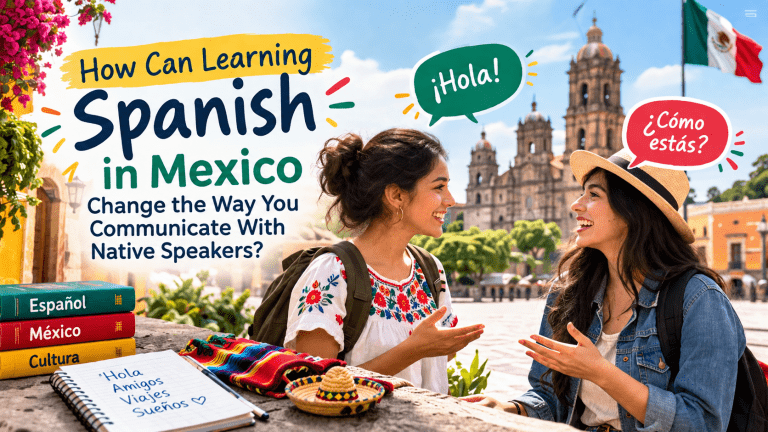
Learning a new language is about much more than memorizing vocabulary and understanding grammar rules. True language learning changes the way you listen, think, respond, and connect with other people. This is especially true when you learn through immersion in Spanish in Mexico, where the language becomes part of your everyday life.
For many students, taking Spanish language classes in Mexico is not simply an academic experience. It is an opportunity to communicate with native speakers in real situations, understand cultural differences, and develop the confidence to use Spanish outside the classroom.
But how exactly can learning Spanish in Mexico change the way you communicate with native speakers?
The answer lies in immersion. When you combine structured lessons at Spanish schools in Puebla, Mexico, with real-world conversations, you begin to understand that communication is not only about speaking correct Spanish. It is also about listening carefully, understanding context, responding naturally, and knowing how culture influences conversations.
Whether your goal is to learn to speak Spanish, travel, work internationally, or speak Spanish fluently, an immersive learning experience can transform the way you communicate.
What Makes Learning Spanish in Mexico Different?
One of the biggest advantages of studying Spanish in Mexico is that you are surrounded by the language.
When you enroll in Spanish immersion programs in Mexico, Spanish is no longer something you study only for a few hours each week. You hear it in shops, restaurants, streets, markets, and everyday conversations.
This constant exposure helps you become comfortable with the natural rhythm of the language.
In a traditional learning environment, you might practice a conversation from a textbook. During language immersion experiences in Mexico, you may need to use Spanish to order lunch, ask for directions, greet a neighbor, or have a conversation with someone you have just met.
These everyday situations teach you how communication actually works.
How Does Spanish Immersion Change the Way You Talk to Native Speakers?
The biggest change is confidence.
Many people understand more Spanish than they think, but they hesitate to speak because they are afraid of making mistakes. Spanish immersion classes in Mexico give students regular opportunities to practice in a supportive environment.
Over time, you begin to realize that communication does not require perfect grammar.
You learn to:
- Express your ideas even when your vocabulary is limited
- Ask questions when you do not understand something
- Use different words to explain the same idea
- Respond more quickly
- Become comfortable with mistakes
This is one of the most important steps toward becoming fluent.
The goal of Spanish language immersion programs is not simply to help you pass a language test. It is to help you communicate naturally and confidently in real situations.
1. You Learn to Listen Beyond Individual Words
One of the first things students notice during immersion is that native speakers often talk faster than expected.
They may use contractions, expressions, slang, or regional phrases that are not always found in textbooks.
At first, this can feel overwhelming.
However, regular exposure improves your listening skills. You gradually stop trying to understand every individual word and begin focusing on the overall meaning.
This changes the way you communicate.
Instead of waiting for someone to finish speaking so you can translate their sentence, you start understanding the conversation as a whole.
That is an important step toward natural communication.
2. You Start Thinking in Spanish Instead of Translating
Many learners follow this pattern:
Think in English → Translate into Spanish → Speak
This process takes time and often makes conversations feel slow.
With Spanish immersion programs, your brain gradually develops a different habit:
Think in Spanish → Speak
The more you use Spanish every day, the more naturally this process develops.
You begin to recognize common phrases without translating them. You respond automatically to simple questions. Eventually, you may find yourself thinking about daily activities in Spanish.
This ability to process the language directly can make conversations with native speakers much smoother.
3. You Become Better at Understanding Context
Communication is not only about words.
The meaning of a conversation can depend on:
- Tone of voice
- Facial expressions
- Body language
- Situation
- Relationship between speakers
Studying Spanish in Mexico gives you the opportunity to observe these elements in real life.
For example, you may learn that the same phrase can sound friendly, formal, humorous, or serious depending on the situation.
This cultural awareness helps you communicate more appropriately with native speakers.
4. You Learn Real-World Spanish
Textbooks are useful, but real conversations are unpredictable.
A native speaker might use an expression you have never heard before. Someone might speak quickly. Another person may use a local phrase that is unfamiliar to you.
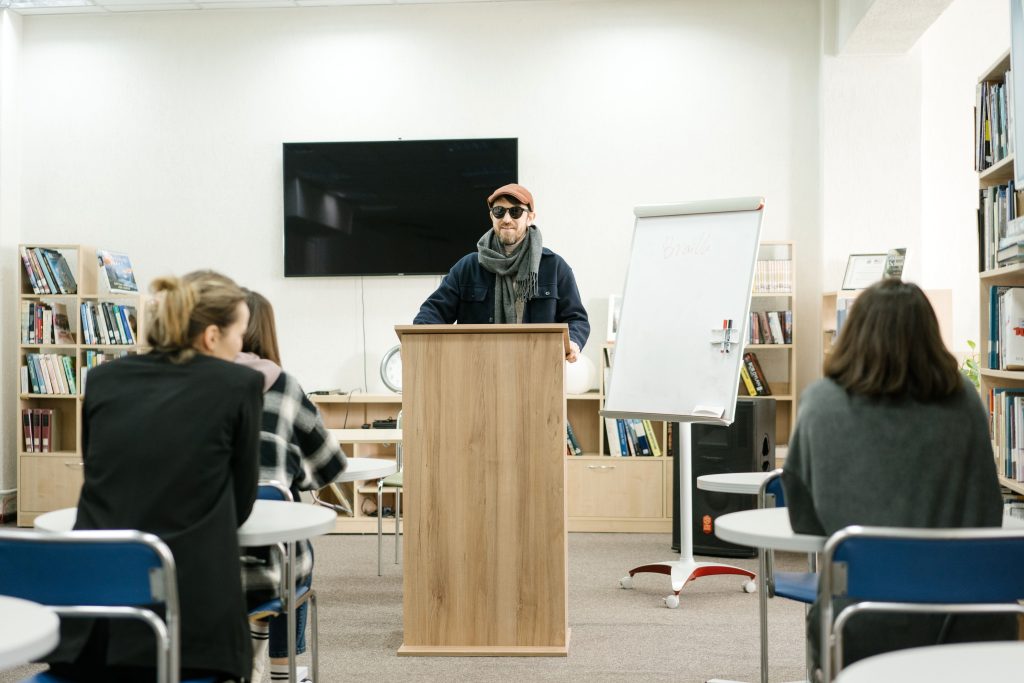
This is where Spanish immersion schools can provide a valuable learning environment.
Through regular interaction, students learn how Spanish is actually used in everyday life.
You begin to understand:
- Common expressions
- Informal vocabulary
- Conversation starters
- Polite phrases
- Regional differences
These skills help you move beyond textbook Spanish and become a more flexible communicator.
5. You Become Less Afraid of Making Mistakes
Fear is one of the biggest barriers to speaking a new language.
Many students worry that native speakers will judge their grammar or pronunciation.
Immersion changes this mindset.
When you communicate every day, you quickly realize that mistakes are normal. You may use the wrong verb tense or forget a word, but the conversation continues.
This teaches you an important lesson:
You do not need perfect Spanish to communicate effectively.
The more mistakes you make and correct, the more confident you become.
This confidence is one of the most valuable benefits of joining the best Spanish immersion programs.
6. You Learn How to Keep a Conversation Going
Knowing vocabulary is not the same as knowing how to have a conversation.
A good conversation requires you to:
- Ask follow-up questions
- Show interest
- Respond naturally
- Change topics
- Clarify information
- Express agreement or disagreement
During Spanish language classes in Mexico, students can develop these skills through structured conversations. Outside class, real-life interactions provide even more practice.
Over time, conversations become less stressful and more natural.
You stop thinking about every sentence before saying it and begin participating actively.
7. You Develop Better Cultural Awareness
Language and culture are closely connected.
Learning Spanish in Mexico allows you to understand how cultural expectations influence communication.
For example, you may discover differences in:
- Greetings
- Personal space
- Formality
- Politeness
- Social relationships
Understanding these cultural details helps you communicate more respectfully and effectively.
This is one reason Spanish immersion programs in Mexico can provide an experience that goes beyond traditional language instruction.
You are not simply learning words. You are learning how people use those words in their everyday lives.
8. You Become More Comfortable Starting Conversations
For many students, starting a conversation is harder than answering one.
Immersion encourages you to take the first step.
You may need to ask someone a question, introduce yourself, or start a conversation with a local person.
Each interaction makes the next one easier.
This is particularly useful for students who want to learn to speak Spanish in Mexico because it develops communication skills that can be used while traveling, working, volunteering, or living abroad.
9. You Learn to Communicate Even When You Don’t Know a Word
Fluent communication does not mean knowing every Spanish word.
Even native speakers sometimes forget words or struggle to explain something.
Immersion teaches you how to work around vocabulary gaps.
You learn to:
- Describe an object
- Give examples
- Use simpler words
- Explain what you mean
- Ask for the correct word
These strategies make you a more confident communicator.
Instead of immediately switching to English when you forget a word, you learn to keep the conversation moving.
10. You Build Relationships Through Spanish
Perhaps the most meaningful change is the ability to build genuine relationships with Spanish-speaking people.
When you can communicate in someone’s native language, conversations often become more personal and meaningful.
You can share:
- Stories
- Experiences
- Opinions
- Humor
- Personal interests
This creates connections that may not be possible through basic tourist-level Spanish.
For many students, this is the real value of joining Spanish language immersion programs.
You are not just learning how to speak. You are learning how to connect.
Why Choose Spanish Schools in Puebla Mexico?
Choosing the right destination can make a major difference in your immersion experience.
Puebla offers students an opportunity to learn Spanish in an authentic Mexican environment while experiencing the city’s rich history and culture.
For students considering Spanish schools in Puebla Mexico, the city provides an ideal setting for combining structured language education with everyday opportunities to communicate in Spanish.
At SIPuebla, students can focus on developing practical communication skills through structured instruction and immersive experiences. The school’s programs are designed for learners at different levels, helping students progress while using Spanish in meaningful situations.
Who Can Benefit From Spanish Immersion in Mexico?
Spanish immersion programs can benefit a wide range of learners, including:
- Complete beginners
- University students
- Professionals
- Travelers
- Teachers
- Healthcare workers
- Missionaries
- Retirees
- Anyone who wants to improve conversational Spanish
The most important requirement is a willingness to participate.
The more you communicate, the more you learn.
How Can You Get the Most From a Spanish Immersion Program?
If you want to make the most of your experience, try these simple strategies:
Speak Spanish Every Day
Do not limit Spanish to classroom hours. Use it whenever possible.
Accept Mistakes
Mistakes are part of the learning process.
Ask Questions
If you do not understand something, ask the speaker to repeat or explain it.
Listen Actively
Pay attention to how native speakers structure sentences and respond to each other.

Keep a Vocabulary Journal
Write down useful words and expressions you hear during daily conversations.
Avoid Translating Everything
Try to understand meaning from context instead of translating every word.
Participate in Local Life
The more you interact with the local community, the more opportunities you have to practice.
Final Thoughts: Learning Spanish Changes More Than Your Vocabulary
Learning a language can change the way you communicate with the world.
When you choose immersion in Spanish in Mexico, you gain more than vocabulary and grammar knowledge. You learn how to listen carefully, respond naturally, understand cultural context, overcome communication challenges, and connect with people in meaningful ways.
Whether you choose a short Spanish language course or a longer immersion experience, the key is to use what you learn actively.
The journey from studying Spanish to actually communicating in Spanish begins when you step outside the textbook.
If your goal is to Speak Spanish Fluently, consider immersing yourself in the language, practicing it every day, and communicating with native speakers in real-world situations. With the right learning environment, dedication, and a willingness to make mistakes, Spanish can become more than a subject you study—it can become a language you truly live.
Frequently Asked Questions About Learning Spanish in Mexico
Is learning Spanish in Mexico a good way to become fluent?
Yes. Immersion provides frequent exposure to Spanish and creates opportunities to use the language in real-world situations. Combined with structured instruction and consistent practice, it can help learners develop stronger speaking and listening skills.
How does immersion help with communication?
Immersion helps you communicate more naturally by giving you regular opportunities to listen to native speakers, practice conversations, understand context, and respond without constantly translating from your first language.
Are Spanish immersion classes suitable for beginners?
Yes. Many Spanish immersion classes in Mexico are designed for learners at different proficiency levels. Beginners can start with basic vocabulary and gradually develop their speaking confidence through structured lessons and everyday practice.
Can I learn Mexican Spanish through an immersion program?
Yes. Studying Spanish in Mexico allows you to experience the vocabulary, expressions, pronunciation, and cultural context commonly used in Mexico.
How long does it take to speak Spanish fluently?
There is no single timeline because progress depends on your starting level, study schedule, exposure, and practice habits. Consistent immersion can accelerate learning, but becoming fluent requires ongoing practice.