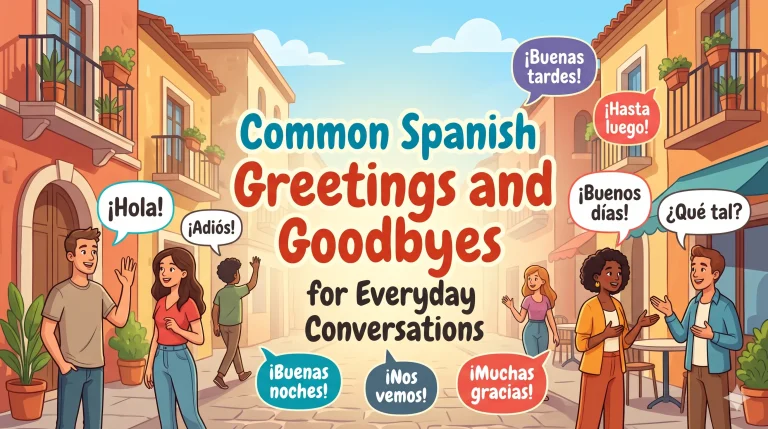
Imagine walking into a small café in Mexico. The person behind the counter smiles and says, ¡Buenos días! You know it means “Good morning,” so you smile and respond. A few minutes later, you hear someone leaving with a cheerful ¡Nos vemos! Suddenly, you realize that everyday Spanish conversations involve much more than simply saying hola and adiós.
Greetings and goodbyes are among the first expressions you learn when studying Spanish. They may seem simple, but they play an important role in making conversations feel friendly, natural, and respectful.
Whether you’re visiting Mexico, making Spanish-speaking friends, or planning to learn Spanish abroad, knowing how to greet people appropriately can make everyday interactions much easier.
This guide introduces common Spanish greetings and goodbyes, explains when to use them, and shares practical examples to help you speak more naturally.
Why Are Greetings and Goodbyes Important in Spanish?
In Spanish-speaking cultures, greetings are often an important part of everyday social interactions. They help establish a friendly atmosphere before the conversation begins.
In Mexico, for example, it’s common to greet people when entering a small shop, joining a group, or beginning a conversation with someone you already know.
You might say buenos días when entering a bakery or buenas tardes when approaching a receptionist.
Goodbyes are equally meaningful. Instead of ending every interaction with adiós, Spanish speakers frequently choose expressions that reflect their relationship with the other person or when they expect to meet again.
Learning these differences helps you communicate politely and understand the social context behind everyday Spanish expressions.
1. Common Spanish Greetings You Should Know
Spanish offers several ways to say hello. Some are appropriate in almost every situation, while others are better suited to friends or informal conversations.
Hola – Hello
Hola is the most familiar Spanish greeting and one of the easiest expressions for beginners to remember.
You can use it with friends, classmates, coworkers, shopkeepers, and people you’re meeting for the first time.
For example:
¡Hola! ¿Cómo estás? — Hello! How are you?
Because hola works in both formal and informal settings, it’s an excellent starting point for anyone learning Spanish.
Buenos días – Good Morning
Buenos días is used to greet someone during the morning.
It’s appropriate in professional environments, classrooms, restaurants, and everyday situations.
For example:
Buenos días, profesora. — Good morning, professor.
In Mexico, you’ll often hear this expression when entering businesses or greeting neighbors early in the day.
Buenas tardes – Good Afternoon
Buenas tardes is generally used from around midday until the evening, although the exact transition varies.
For example:
Buenas tardes, ¿cómo le va? — Good afternoon, how are you doing?
This greeting works particularly well when speaking politely with someone you don’t know.
Buenas noches – Good Evening or Good Night
Unlike English, Spanish uses buenas noches both as an evening greeting and when saying good night.
For example:
Buenas noches, ¿cómo están? — Good evening, how is everyone?
Buenas noches, que descanses. — Good night, rest well.
The meaning depends on whether you’re arriving, greeting someone, or preparing to leave.
2. Informal Spanish Greetings for Friends and Everyday Conversations
Once you feel comfortable with basic greetings, you can begin using expressions commonly heard in casual Spanish conversations.
¿Qué tal? – How’s It Going?
¿Qué tal? is a friendly, informal greeting that works with friends, acquaintances, and people you know reasonably well.
For example:
¡Hola, Ana! ¿Qué tal? — Hi, Ana! How’s it going?
A simple response is Muy bien, gracias (Very well, thanks).
¿Cómo estás? – How Are You?
This is one of the most useful questions for everyday Spanish conversations.
Use ¿Cómo estás? when speaking informally with one person.
If you want to be more formal or respectful, you can say ¿Cómo está usted?
For example:
Hola, Carlos. ¿Cómo estás? — Hello, Carlos. How are you?
Estoy bien, gracias. ¿Y tú? — I’m fine, thanks. And you?
¿Qué onda? – What’s Up?
¿Qué onda? is a popular casual greeting in Mexican Spanish.
You’ll commonly hear it among friends and people who speak comfortably with one another.
For example:
¡Qué onda, Luis! ¿Cómo te va? — What’s up, Luis? How’s it going?
Although it’s useful for understanding conversations in Mexico, avoid using it in formal business situations or with people who expect a more respectful greeting.
¿Qué cuentas? – What’s New?
¿Qué cuentas? is another friendly expression used to ask someone what they’ve been doing or what’s happening in their life.
For example:
¡Hola, María! ¿Qué cuentas? — Hi, María! What’s new?
It’s especially useful when reconnecting with friends or acquaintances.
3. Common Spanish Goodbyes for Everyday Situations
Just as Spanish has several greetings, it also offers different ways to end conversations.
Choosing the right expression depends on whether you’re leaving permanently, expecting to meet again soon, or simply ending a casual interaction.
Adiós – Goodbye
Adiós is a standard Spanish goodbye that works in many situations.
For example:
Adiós, muchas gracias por todo. — Goodbye, thank you very much for everything.
Although adiós is perfectly acceptable, it’s not always the most common expression when you expect to see someone again soon.
Hasta luego – See You Later
Hasta luego is one of the most useful Spanish goodbyes.
It expresses the idea that you may see the other person again, without necessarily specifying when.
For example:
Gracias por tu ayuda. ¡Hasta luego! — Thanks for your help. See you later!
You can use it with friends, coworkers, teachers, and shopkeepers.
Nos vemos – See You
Nos vemos is a natural, friendly goodbye frequently used in everyday conversations.
For example:
Bueno, me tengo que ir. ¡Nos vemos! — Well, I have to go. See you!
This expression works particularly well when leaving friends or acquaintances.
Hasta mañana – See You Tomorrow
Use hasta mañana when you expect to see someone the following day.
For example:
Hasta mañana, compañeros. — See you tomorrow, classmates.
It’s common in schools, workplaces, and other places where people meet regularly.
Hasta pronto – See You Soon
Hasta pronto suggests that you hope or expect to see someone again relatively soon.
For example:
Fue un gusto conocerte. ¡Hasta pronto! — It was nice meeting you. See you soon!
This expression works in both friendly and polite situations.
Cuídate – Take Care
Cuídate adds warmth to a goodbye and is often used with people you care about.
For example:
Que tengas buen viaje. ¡Cuídate! — Have a good trip. Take care!
When addressing someone formally, you can use cuídese.
Que te vaya bien – Have a Good One
Que te vaya bien is a warm, friendly way to wish someone well as they leave.
For example:
¡Hasta luego! Que te vaya bien. — See you later! Have a good one.
It’s commonly used in Mexico when parting from friends, coworkers, or acquaintances. The formal version is que le vaya bien.
4. How to Greet People Politely in Mexico
When learning Spanish in Mexico, understanding the difference between formal and informal greetings is especially helpful.
Spanish uses tú for familiar interactions and usted for more formal or respectful communication. In Mexico, usted is commonly used when addressing older adults, customers, or people in professional settings, although preferences vary.
For example:
Mucho gusto en conocerlo. — It’s a pleasure to meet you. (Formal, addressing a man)
Mucho gusto en conocerte. — It’s a pleasure to meet you. (Informal)
In casual situations, a simple mucho gusto works with anyone.
You might also hear con permiso when someone needs to pass, excuse themselves, or leave a conversation. While it isn’t a traditional goodbye, it’s useful for handling everyday interactions politely.
5. How to Practice Spanish Greetings in Real Conversations
Memorizing expressions is helpful, but using them in conversations makes them easier to remember.
Start by practicing short exchanges aloud. Imagine entering a café and greeting the person behind the counter:
Cliente: Buenos días. ¿Cómo está? — Good morning. How are you?
Empleado: Muy bien, gracias. ¿En qué le puedo ayudar? — Very well, thank you. How can I help you?
Cliente: Quisiera un café, por favor. — I’d like a coffee, please.
After finishing, you could say Muchas gracias. ¡Hasta luego!
You can practice similar conversations at home or with a language partner.
For learners interested in Spanish immersion classes in Mexico, these expressions become particularly useful because they appear naturally in restaurants, markets, classrooms, and social activities.
The Spanish Institute of Puebla emphasizes practical communication through its intensive Spanish immersion program. The school offers eight levels, each lasting three weeks, combining classroom instruction with conversation practice and cultural experiences.
Such an environment gives learners opportunities to practice greetings and goodbyes while developing broader communication skills.
Final Thoughts: Start Every Spanish Conversation with Confidence
Learning common Spanish greetings and goodbyes is a small but meaningful step toward communicating naturally.
Expressions such as hola, buenos días, ¿qué tal?, hasta luego, and nos vemos help you begin and end conversations comfortably.
As you become familiar with these phrases, pay attention to how native speakers use them in different situations. Understanding when to be formal, friendly, or casual is just as valuable as memorizing the words themselves.
If you’re interested in developing stronger conversational skills, studying Spanish in a Spanish-speaking environment can provide additional opportunities to practice.
At the Spanish Institute of Puebla, students combine structured language lessons with everyday communication and cultural experiences in Mexico.
With regular practice, these simple greetings can become the beginning of more confident, meaningful conversations in Spanish.
Frequently Asked Questions About Spanish Greetings and Goodbyes
What is the most common greeting in Spanish?
Hola is one of the most widely used Spanish greetings. It means “hello” and works in formal and informal situations. Other common greetings include buenos días, buenas tardes, and buenas noches.
How do you say goodbye naturally in Mexican Spanish?
Hasta luego, nos vemos, and adiós are all common choices. In casual Mexican Spanish, you’ll also frequently hear bye, borrowed from English, particularly among friends.
What is the difference between adiós and hasta luego?
Adiós means goodbye and doesn’t specify when you’ll meet again. Hasta luego means “see you later” and suggests a future meeting, though it doesn’t necessarily mean later that same day.
Is qué onda appropriate in formal conversations?
Generally, no. ¿Qué onda? is an informal Mexican Spanish greeting best used with friends, peers, or people you know well. In professional or unfamiliar settings, buenos días or buenas tardes is usually more appropriate.
Can I learn everyday Spanish greetings through immersion?
Yes. Language immersion in Mexico offers opportunities to hear and use everyday expressions in real situations. Practicing with teachers, classmates, and local residents can help improve pronunciation, confidence, and conversational understanding.